Research Groups
Explore research teams in electronic structure, computational materials, catalysis, dynamics and machine learning for atomistic science. Combine name, institution or topic searches with research-area filters and the A–Z index.
Listed A–Z by principal investigator surname; Chinese surnames use romanization.
Search both Chinese and English names, institutions and research topics.
55 research groups
No groups match these filters. Try fewer search terms or reset the filters.

Ali Alavi
Max Planck Institute for Solid State Research
Electronic Structure Theory
Develops full configuration-interaction quantum Monte Carlo, transcorrelated and many-body methods for strongly correlated molecules and solids.

Jörg Behler
Ruhr University Bochum
Chair of Theoretical Chemistry II
Develops neural-network potentials and atomistic simulation methods for interfaces, materials and aqueous solutions.
Portrait: RUB, Marquard

Timothy Berkelbach
Columbia University
Berkelbach Group
Develops coupled-cluster and quantum-dynamics methods to describe electronic excitations, spectroscopy and condensed-phase materials.
Portrait: Berkelbach Group

Volker Blum
Duke University
Ab Initio Materials Simulations (AIMS)
Develops all-electron electronic-structure methods and scalable software for materials, interfaces, semiconductors and molecular spectroscopy.
Portrait: official PI or group profile

Jochen Blumberger
University College London
Computational Chemical Physics
Uses quantum and classical molecular simulations to study charge transport, excited states and redox processes in materials and biomolecules.
Portrait: Blumberger Group

Giuseppe Carleo
EPFL
Computational Quantum Science Laboratory
Develops neural-network quantum states, variational Monte Carlo and quantum algorithms for interacting quantum systems and their dynamics.
Portrait: EPFL

Michele Ceriotti
EPFL
Computational Science and Modelling (COSMO)
Combines statistical mechanics, enhanced sampling and machine learning to model atomistic systems and nuclear quantum effects.
Portrait: official PI or group profile

Garnet K. Chan
California Institute of Technology
Chan Group
Develops tensor networks, quantum embedding and many-body simulation methods for strongly correlated molecules and materials.
Portrait: official PI or group profile

Ji Chen
陈基
Peking University
Chen Research Group
Develops neural-network quantum Monte Carlo and atomistic machine-learning methods to study correlated electrons, water and materials.
Portrait: official PI or group profile

Bingqing Cheng
University of California, Berkeley
Cheng Lab
Combines machine-learning potentials, enhanced sampling and path-integral simulations to predict materials, aqueous systems and matter under extreme conditions.
Portrait: UC Berkeley

Michelle Coote
Flinders University
Coote Research Lab
Combines computational chemistry and experiment to design catalysts and synthetic methods, especially bond activation using electric fields and light.
Portrait: official PI or group profile

Clémence Corminboeuf
EPFL
Laboratory for Computational Molecular Design (LCMD)
Combines electronic-structure theory, machine learning and molecular design to study homogeneous catalysis and organic materials.
Portrait: official PI or group profile

Gábor Csányi
University of Cambridge
Molecular Modelling
Develops machine-learned interatomic potentials, atomistic foundation models and enhanced-sampling methods for molecules and materials.
Portrait: University of Cambridge

Christoph Dellago
University of Vienna
Computational Statistical Mechanics
Develops rare-event sampling and machine-learning methods for phase transitions, nucleation, interfaces and nanoscale materials.
Portrait: Christoph Dellago

Volker Deringer
University of Oxford
Deringer Group
Combines quantum mechanics and machine learning to understand atomic structure, bonding and properties of amorphous materials.
Portrait: University of Oxford

Fernanda Duarte
University of Oxford
Duarte Computational Chemistry Research Group
Uses quantum chemistry, molecular dynamics and machine learning to understand reaction mechanisms, enzyme catalysis and supramolecular design.
Portrait: official PI or group profile

Laura Gagliardi
University of Chicago
Gagliardi Group
Develops multireference electronic-structure methods and combines quantum simulation and machine learning to study catalysis, molecular magnets and sustainable-energy materials.
Portrait: official PI or group profile

Giulia Galli
University of Chicago
Galli Group
Develops predictive quantum simulations of materials and molecules for sustainable energy, quantum technologies and microelectronics.
Portrait: official PI or group profile
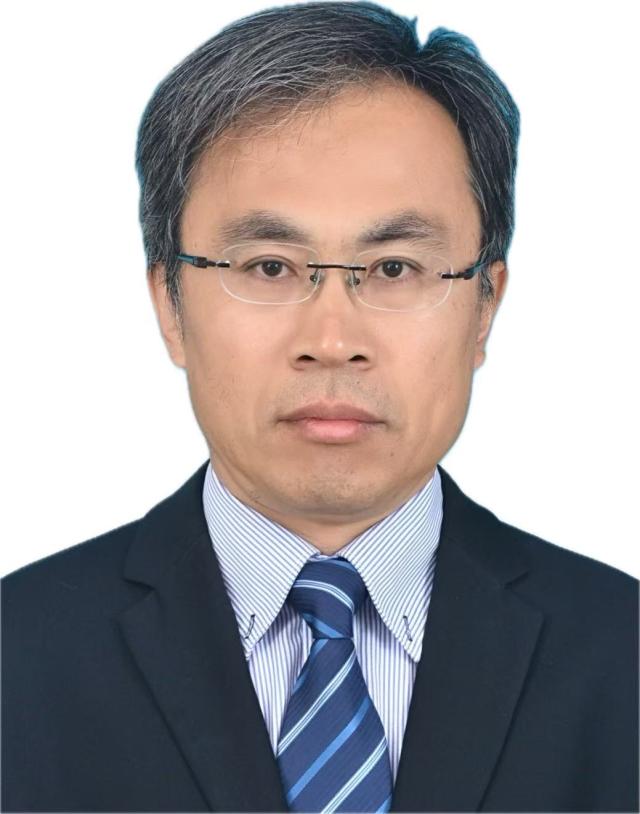
Wentong Geng
耿文通
Zhejiang Normal University
Quantum Design of Cyber Materials
Uses first-principles calculations to study condensed matter and materials, including interfaces and the quantum design of alloys.
Portrait: official PI or group profile

Debashree Ghosh
Indian Association for the Cultivation of Science
DG Lab
Develops electronic-structure approaches for excited states and light–matter interactions, including tensor-network wavefunctions, quantum algorithms and hybrid QM/MM models.
Portrait: official PI or group profile

Leticia González
University of Vienna
González Research Group
Develops electronic-structure and nonadiabatic dynamics methods to model photochemistry and control molecular reactions with light.
Portrait: official PI or group profile

Martin Head-Gordon
University of California, Berkeley
Head-Gordon Group
Develops electronic-structure theories and algorithms for electron correlation, excited states and the interpretation of molecular interactions.
Portrait: official PI or group profile
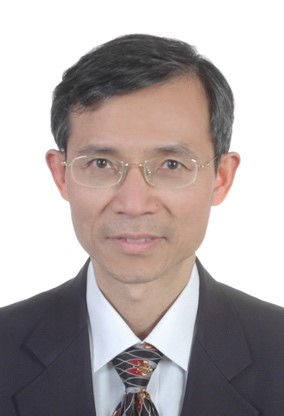
Peijun Hu
胡培君
ShanghaiTech University
Hu Computational Catalysis Group
Combines DFT, microkinetic modeling and machine learning to understand heterogeneous catalysis and design catalysts and energy materials.
Portrait: official PI or group profile

Jun Jiang
江俊
University of Science and Technology of China
Jiang Theoretical and Intelligent Chemistry Research
Develops multiscale theoretical chemistry and AI approaches to electron dynamics, photocatalysis and data-driven materials discovery.
Portrait: official PI or group profile

Boris Kozinsky
Harvard University
Materials Intelligence Research (MIR)
Develops first-principles and machine-learning methods for electronic structure, ion transport and catalytic dynamics in energy materials.
Portrait: official PI or group profile
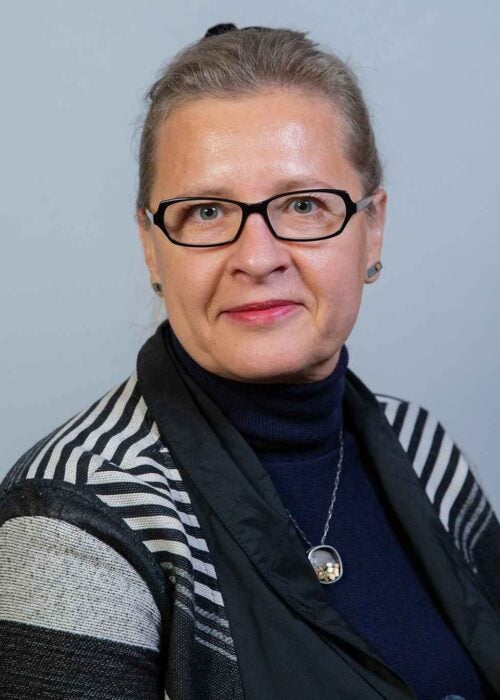
Anna I. Krylov
University of Southern California
Krylov Group (iOpenShell)
Develops quantum-chemical methods for electronically excited and open-shell species, with applications to spectroscopy and quantum information.
Group research profile ↗PI profile ↗
Portrait: official PI or group profile

Zhenyu Li
李震宇
University of Science and Technology of China
Computational Modeling of Molecular and Solid Systems
Models molecular and solid systems with quantum chemistry, including electronic structure, materials properties and quantum-computing approaches.
Portrait: official PI or group profile

Lin Lin
林霖
California Institute of Technology
Lin Research Group
Develops numerical methods for electronic structure and quantum many-body problems, including quantum algorithms, embedding and neural-network approaches.
Portrait: official PI or group profile
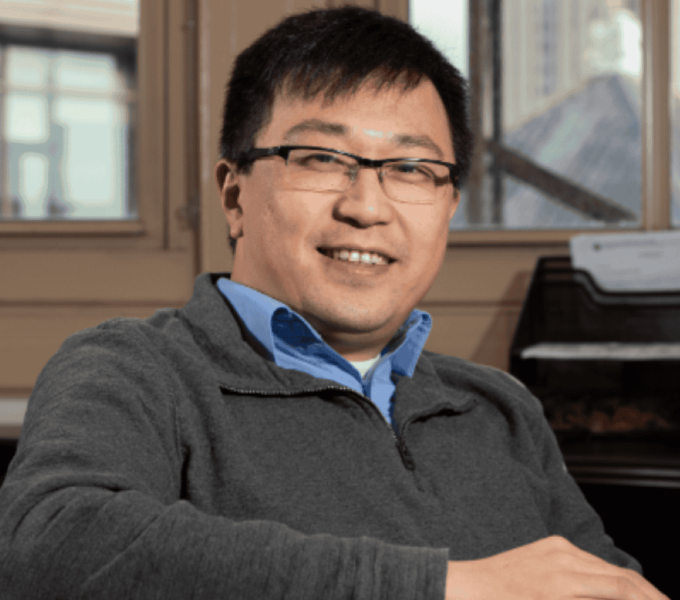
Peng Liu
刘鹏
University of Pittsburgh
Liu Group
Uses computational chemistry to explain organic and organometallic reaction mechanisms, reactivity, and selectivity, and to guide catalyst design.
Portrait: official PI or group profile
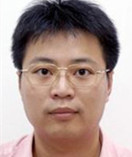
Zhi-Pan Liu
刘智攀
Fudan University
Liu Research Group
Develops theoretical computational methods to investigate catalytic mechanisms and design materials, alongside experimental catalysis.
Portrait: official PI or group profile

Satoshi Maeda
Hokkaido University
GRRM / Maeda Group
Develops automated reaction-path searches, including AFIR, to discover reaction mechanisms, transition states and selective synthetic routes.
Portrait: official PI or group profile

Nicola Marzari
EPFL
Theory and Simulation of Materials (THEOS)
Uses first-principles electronic-structure calculations, Wannier functions and open simulation workflows to understand and discover materials.
Portrait: official PI or group profile

Frank Neese
Max Planck Institute for Coal Research
Molecular Theory and Spectroscopy
Develops ORCA and correlated electronic-structure methods, linking quantum chemistry and spectroscopy to catalytic reaction mechanisms.
Portrait: official PI or group profile

Jörg Neugebauer
Max Planck Institute for Sustainable Materials
Computational Materials Design
Connects first-principles calculations with thermodynamics and kinetics to study defects, surfaces and microstructure in materials.
Portrait: MPI-SusMat

Shyue Ping Ong
National University of Singapore
Materialyze.AI Lab
Integrates materials theory, data and AI, including graph neural networks and interatomic foundation potentials, for materials discovery and design.
Portrait: official PI or group profile

Francesco Paesani
University of California, San Diego
Paesani Research Group
Develops data-driven many-body potentials and quantum molecular simulations for water, aqueous solutions and complex molecular systems.
Portrait: official PI or group profile

Alfredo Pasquarello
EPFL
Chair of Atomic Scale Simulation
Uses density functional theory and atomistic simulation to study disordered materials, atomic processes and oxide–semiconductor interfaces.
Portrait: official PI or group profile

Kristin A. Persson
Lawrence Berkeley National Laboratory
Persson Group
Uses atomistic simulations, high-throughput computing and materials data to study battery electrodes, electrolytes and other energy materials.
Portrait: official PI or group profile

Markus Reiher
ETH Zurich
Reiher Research Group
Develops first-principles electronic-structure algorithms for electron correlation, relativistic quantum chemistry and molecular spectroscopy.
Portrait: official PI or group profile
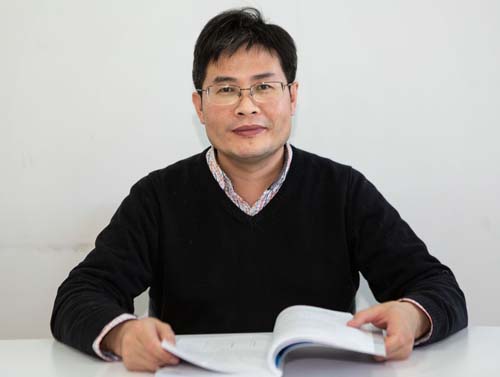
Xinguo Ren
任新国
Institute of Physics, Chinese Academy of Sciences
Ren Electronic-Structure Research
Develops electronic-structure algorithms, RPA correlation functionals and GW excited-state methods for predictive materials simulations.
Portrait: official PI or group profile

Karsten Reuter
Fritz Haber Institute of the Max Planck Society
Theory Department
Combines multiscale modeling, electronic structure and machine learning to study working catalysts and energy-conversion interfaces.
Portrait: FHI / J. Lösel

Patrick Rinke
Technical University of Munich
Chair of AI-based Materials Science
Develops electronic-structure and machine-learning methods for materials, surfaces, chemistry and nanoscale systems.
Portrait: official PI or group profile

Mariana Rossi
University of Cambridge
Rossi Group
Combines density-functional theory, path-integral simulations and machine learning to study nuclear quantum motion, molecular crystals and interfaces.
Portrait: official PI or group profile
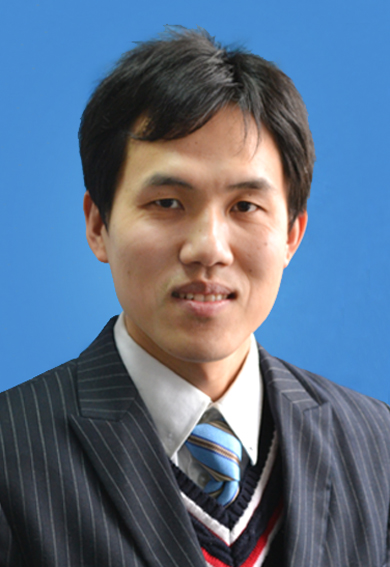
Bin Shan
单斌
Huazhong University of Science and Technology (HUST)
Micro/Nano Materials Design & Manufacturing Center
Studies materials design and controlled fabrication at micro- and nanoscales, multiscale simulation, and the rational design of catalysts.
Portrait: official PI or group profile

Kristian Sommer Thygesen
Technical University of Denmark
First-principles materials research
Develops ground- and excited-state methods for two-dimensional materials, quasiparticles, energy materials and computational materials discovery.
Portrait: official PI or group profile

Alexandre Tkatchenko
University of Luxembourg
Theoretical Chemical Physics
Studies molecular interactions and quantum chemical models across materials, crystal structures and biomolecular dynamics, using physics-based and machine-learning approaches.
Portrait: official PI or group profile

Chris G. Van de Walle
University of California, Santa Barbara
Computational Materials Group
Uses first-principles methods to study semiconductors, oxides, interfaces and point defects, including quantum emitters.
Portrait: official PI or group profile

Lucas K. Wagner
University of Illinois Urbana-Champaign
Wagner Research Group
Develops quantum Monte Carlo and effective-model methods for correlated electrons in materials, alongside open scientific software.
Portrait: official PI or group profile

Jian Wu
吴健
Tsinghua University
Wu Computational Condensed-Matter Research
Uses condensed-matter theory and computation to predict electronic structure and electronic properties of low-dimensional materials.
Portrait: official PI or group profile

Xin Xu
徐昕
Fudan University
Xu Research Group
Develops density functionals and efficient quantum-chemical methods for surface chemistry, molecular systems and catalytic reaction mechanisms.
Portrait: official PI or group profile

Weitao Yang
Duke University
Yang Lab
Develops density-functional theory and electronic-structure methods, with applications to chemical reactions and multiscale molecular simulation.
Portrait: official PI or group profile

Donghui Zhang
张东辉
Dalian Institute of Chemical Physics, Chinese Academy of Sciences
Zhang Theoretical Reaction Dynamics Group
Develops quantum-scattering and wave-packet methods and accurate potential-energy surfaces to explain molecular reaction dynamics.
Portrait: official PI or group profile
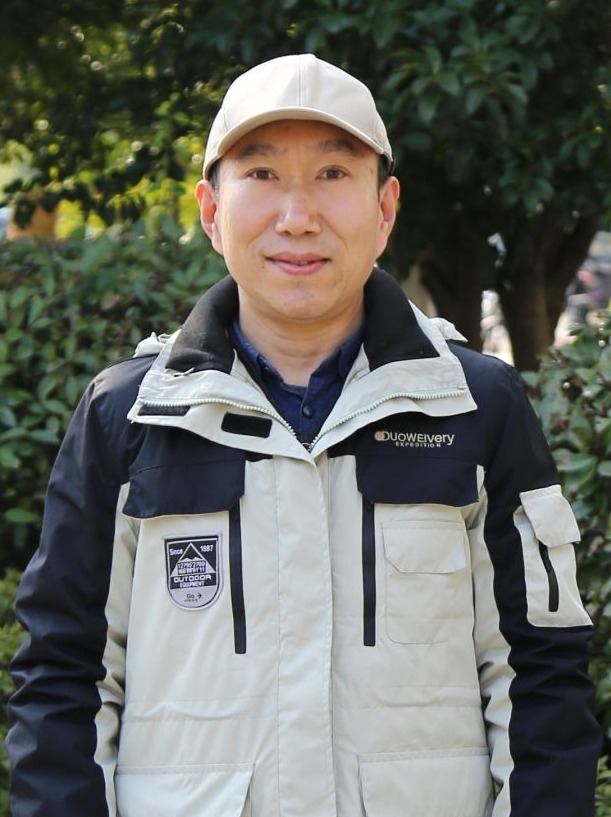
Jianwei Zhao
赵健伟
Jiaxing University
Computational chemistry & electrochemical engineering
Works on electrochemical engineering, interfacial electron transfer, and computational chemistry.
Portrait: official PI or group profile

Yujun Zhao
赵宇军
South China University of Technology
Computational Physics Group
Studies crystal defects and doping, crystal-structure searches, and catalysis on transition-metal surfaces.
Portrait: official PI or group profile
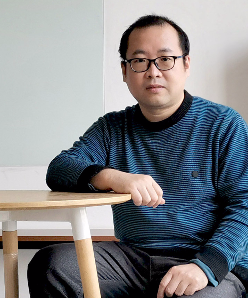
Wenli Zou
邹文利
Northwest University, China
Electronic Structure Theory Team
Develops electronic-structure methods and software, with research in relativistic quantum chemistry and precise simulations of molecular excited states and spectra.
Group research profile ↗PI profile ↗
Portrait: official PI or group profile